Where to Meet New People in Berlin Offline
Run clubs, supper clubs, courses, choirs, language cafés and volunteering: real ways to meet new people in Berlin offline, plus how to go alone and meet again.
Berlin is full of people who would like to meet someone and do not know where to start. The city has plenty of things that repeat every week, and repetition makes it easier for a first meeting to become an acquaintance, and sometimes more. This guide sorts the options by type, with two or three concrete examples each. We only list what we could confirm for 2025 or 2026. Times change, so check the organiser's own page before you go.
The options at a glance
| Way | Good for | Effort | Cost, roughly | Example |
|---|---|---|---|---|
| Run clubs | Friends, easy start | Low | Mostly free | Slow Poke Run Club |
| Supper clubs, strangers dinners | Long conversations | Medium | Subscription plus your own bill | Timeleft |
| Courses and workshops | Seeing the same people for weeks | Medium | Varies, e.g. €205 for 8 improv evenings | Die Gorillas |
| Sports clubs and bouldering | Friends through a shared task | Medium | €68 course fee for 4 weeks plus entry, or a club fee | Boulderklub Kreuzberg |
| Language cafés and tandems | Newcomers, international crowd | Low | Free to €5 | Berlin Lingua Hub |
| Choirs and culture | Belonging to a group | Medium | €39 a month plus €25 a year for one choir | Here To Sing |
| Volunteering | Meaning plus company | Low to medium | Free | Berliner Tafel |
| Community evenings | Going with one friend | Low | Drinks, sometimes an entry fee | Pub quizzes |
| Singles formats | Dating, clear intention | Low | From about €29 | Speeddating XXL |
| Queer spaces | Community, dating, friends | Low | Often free | Sonntags-Club |
Ways to meet people, by type
Run clubs
The easiest entry point: fixed time, free, coffee afterwards. Slow Poke Run Club meets on Monday evenings in Mauerpark at an easy pace, Queer Running Club Berlin on Saturday mornings in Volkspark Friedrichshain, and the Hasenheide parkrun is a free timed 5 km every Saturday at 9:00. Fourteen clubs with times and meeting points are in our guide to run clubs in Berlin.
Supper clubs and strangers dinners
Timeleft runs dinners in Berlin restaurants on Wednesdays for groups of four to six strangers, matched by a short questionnaire; you pay a subscription (check the current plans when booking) plus your own food and drinks. Strangers' Supper meets in restaurants with no fee beyond what you order; dates go out on Telegram and Instagram, and the group names no clear fixed rhythm. More options are in our supper clubs guide.
Courses and workshops
A course means the same people for several weeks. The twelve Berlin Volkshochschulen share one booking portal; Tempelhof-Schöneberg alone announced over 1,000 courses for the autumn 2026 semester, from languages to creative workshops. If you want a room that laughs a lot, the Gorillas improv school runs eight English-language evenings for beginners and advanced players, Mondays from 19:30 to 22:00 between 19 October and 14 December 2026, for €205; a taster session beforehand is required.
Sports clubs and bouldering
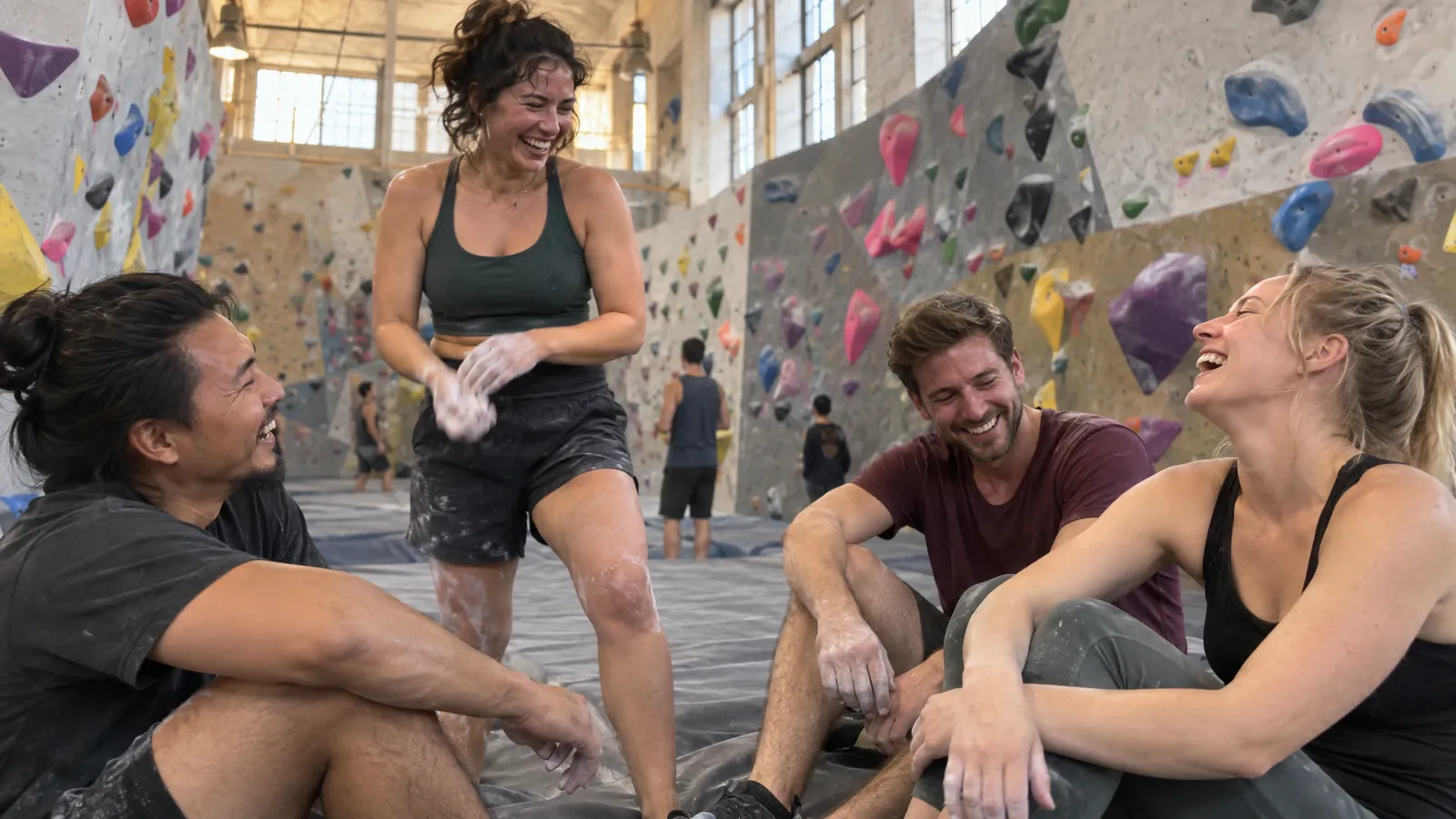
Bouldering is social by design: you wait at the wall and trade tips. Boulderklub Kreuzberg offers a four-week Technique 1 course with at most seven people per trainer, also as a FLINTA* course, and the first course each month is in English. The €68 course fee does not include entry or shoe and chalk rental. Berta Block in Pankow is said to be the city's largest bouldering hall (visitBerlin). Vorspiel, the queer sports club, offers 39 sports and is open to everyone.
Language cafés and tandems
Here, starting a conversation is the whole point. Berlin Lingua Hub runs a German Sprachcafé at Denizen on Köpenicker Straße on Mondays and Wednesdays, arrival from 18:00, start 18:30, €5 including a soft drink. Mondays are for levels A1 to B2.1, Wednesdays for all levels; the last Monday of the month is currently reserved for FLINTA*. More dates are in the Berlin hilft overview, sorted by weekday and recommended by Transmitter; check each listing before you go.
Choirs and culture
Singing in a group builds a sense of belonging quickly. Here To Sing at the School of Voice is a non-audition pop choir on Tuesday evenings in Zehlendorf or Wednesday evenings in Prenzlauer Berg, according to its website: €39 a month for a six-month term plus €25 a year for sheet music and registration, with a €15 trial class. For one evening without commitment, Rudelsingen at Die Wühlmäuse is a sing-along with lyrics on screen, with dates through October 2026.
Volunteering
Working side by side takes the pressure off talking. The Berliner Tafel has after-work shifts from 17:00 where volunteers sort fruit and vegetables to music, with no long-term commitment. vostel.de lists one-off volunteering slots across Berlin districts with fixed dates.
Community evenings
A pub quiz works well with one friend, and the next table soon becomes company. The Berliner's 2026 quiz guide lists, among others, the Castle Quiz Night on Mondays in Mitte, the Big Gay Quiz on Wednesdays at Bar Saint Jean and Let's Get Quizzical in English and German at Alte Turnhalle. Some quizzes charge an entry fee, so check with the organiser.
Singles formats
If you want to date, these formats save guesswork. Socialmatch replaces speed dating rounds with a board game for up to ten singles per age group, with dates into December 2026. Gay-Speeddating XXL runs five-minute dates for gays or lesbians by age group in Berlin bars, €29.
Queer spaces
The Sonntags-Club in Prenzlauer Berg hosts many regular groups, such as Zweite Halbzeit for older gay men and FrauenLesben*Freitag. At Berolinastraße 9a, the RuT gGmbH opened its lesbian housing project with a queer community centre on 28 August 2026; the association RuT, the open initiative of lesbian women, runs groups like Lesbenwelten 65+ there.
Going alone
Choose one format and go three times before you judge it. The first evening is often the most awkward, and every visit raises the chance of familiar faces. Formats with a task (running, climbing, singing, a quiz) help most on your own, because they give you something to talk about.
Good openers are deliberately boring: "Is this your first time too?", "How did you find this?", "What brought you here?" Ask one follow-up question and listen to the answer. Many people are relieved when someone else starts.
From one meeting to meeting again
A good conversation does not turn into meeting again on its own. Before you leave, suggest one concrete next thing: "Are you coming next Monday?" or "I'm going to the quiz on Wednesday, want to join?" A specific plan is much easier to say yes to than "we should hang out sometime".
Try this week
- Pick one weekly format from the table above
- Put the date in your calendar and tell one friend
- Arrive five minutes early and talk to one person
- Before leaving, suggest one concrete next time
For hosts
If you run evenings like these, you know that people often get on well and then lose track of each other. before is a small web app for hosts: guests check in with a QR code and a selfie. The next morning, checked-in guests can see the selfies of the other checked-in guests; those who left an email address get access by email. One-sided wishes stay invisible, before sends no rejections, and contact only opens if both want it. Whether that leads to a meeting is up to the guests. There are no profiles to keep up.